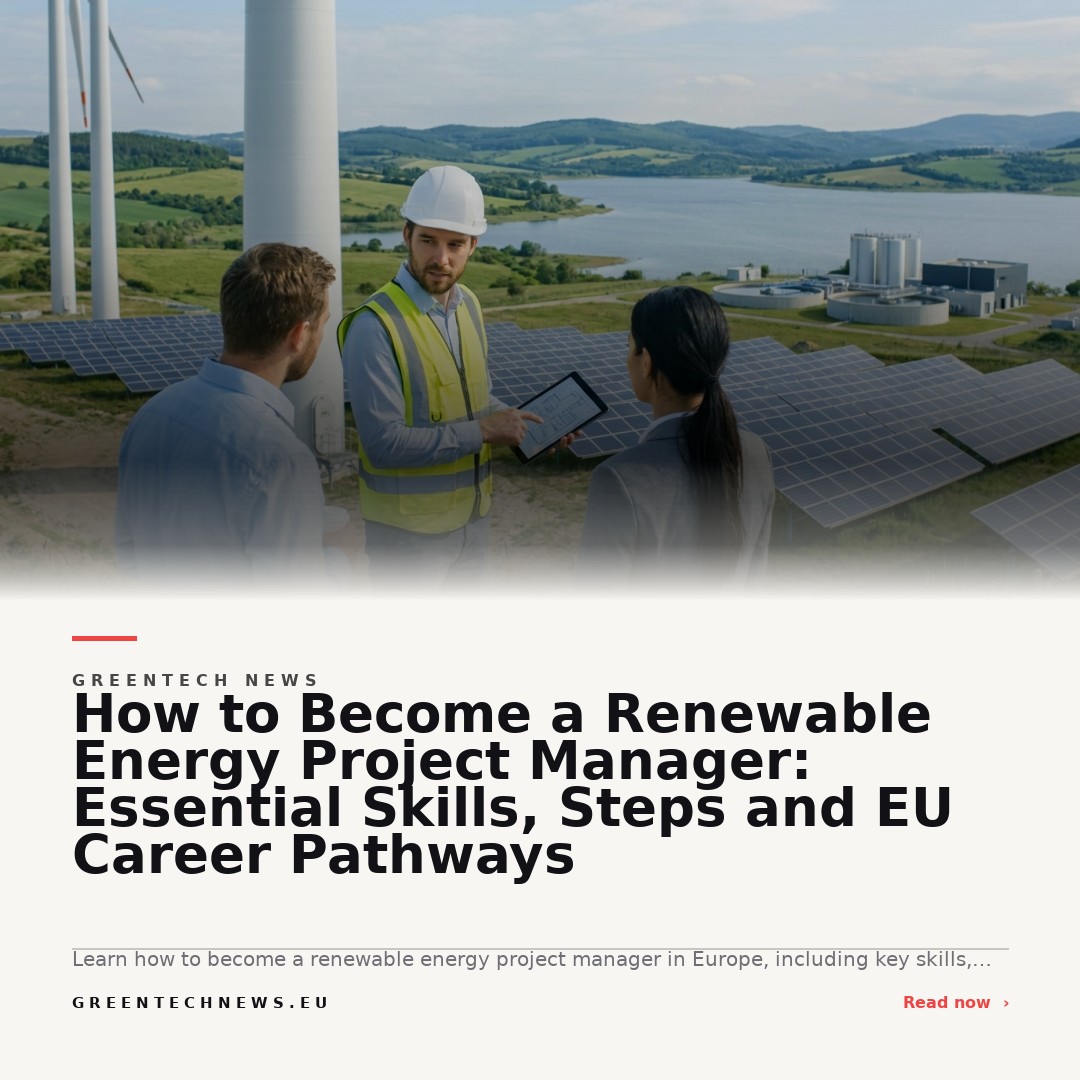
To become a renewable energy project manager in Europe, candidates need a relevant degree, practical experience, and key skills like project management, communication, and sector knowledge. Structured EU programs and certifications provide valuable pathways for career progression.
Becoming a renewable energy project manager in Europe requires a blend of technical expertise, strong project management skills, and a deep understanding of the continent’s regulatory and funding landscape. Candidates typically hold a relevant engineering or science degree, gain practical experience through internships or project work, and bolster their profile with certifications or EU-specific professional development. With demand rising across Europe for specialists who can bridge technical and commercial teams, this guide sets out the concrete steps and career pathways for aspiring professionals in the sector.
- A relevant degree and sector-specific experience are essential requirements.
- Project managers need advanced skills in communication, negotiation, and technical problem-solving.
- European programs like Erasmus+ expand career pathways and international exposure.
- Certifications and ongoing professional development enhance employability and advancement opportunities.
What does a renewable energy project manager do in Europe?
A renewable energy project manager is a professional responsible for planning, executing, and delivering complex energy projects, such as wind farms or solar parks, throughout Europe. Their role is not only technical; it spans commercial, regulatory, and multicultural contexts—project managers act as the bridge between engineering teams, financial stakeholders, regulatory bodies, and local communities. They oversee budgets, set project timelines, coordinate multidisciplinary teams, and ensure compliance with both national and EU directives. Crucially, their work ensures that projects not only launch but operate successfully, driving the continent’s energy transition.
What qualifications are needed to enter this field?
The most common entry requirement is a bachelor’s degree in engineering, environmental science, or a related discipline, though many employers prefer candidates with a master’s degree or further specialization. Specialized certifications such as PRINCE2 or PMP are highly valued and can set applicants apart in competitive selection processes. Practical experience, gathered through internships, graduate schemes, or engineering project work, is crucial—employers prioritize candidates who can demonstrate hands-on understanding of project logistics and the unique challenges of energy installations. EU-wide programs like Erasmus+ offer valuable training placements, cross-border exposure, and the chance to build a professional network relevant for starting a European career path in renewables.[1][2][3]

Which skills are essential for renewable energy project managers?
Success as a project manager in this sector demands a broad set of technical and soft skills. Analytical thinking and problem-solving underpin the ability to navigate complex challenges, from site selection to technology selection and risk management. Mastery of project management principles—including budget management, scheduling, and resourcing—is fundamental. Just as vital are communication and negotiation skills, which facilitate alignment among stakeholders and secure project buy-in. Teamwork is essential, given the cross-functional nature of most projects. Sector-specific knowledge, such as understanding grid integration, construction methods, or environmental regulations, distinguishes effective managers. For further development of these soft skills, resources like soft skills boosters and negotiation strategies offer actionable guidance.[1][2]
How do you gain the practical experience employers look for?
Gaining practical experience in renewable energy can start during university studies, with internships or part-time roles at engineering firms, utility companies, or clean tech startups. Participation in graduate trainee schemes, project-based work, or technical competitions helps build a track record. On-site work—whether supervising construction, commissioning new systems, or liaising with suppliers—provides vital insight into project lifecycles. Many successful project managers build their early careers by assisting on specific workstreams within larger projects before progressing to leadership roles.[3]
What EU-specific pathways and programs support this career?
Several EU-supported schemes are tailored for aspiring renewable energy professionals. Erasmus+ is a standout, offering placement opportunities and mobility grants across the EU, allowing students and graduates to gain practical experience in other European countries. The expansion of the European Green Deal and targeted EU funding frameworks—such as Horizon Europe—provide structured opportunities to work on international projects, hone cross-cultural skills, and participate in cutting-edge research and deployment environments. These programs play a critical role in exposing future project managers to multi-national contexts and best practices.[1]
Why are certifications and ongoing development important?
In a fast-evolving sector, certifications such as PRINCE2, PMP, or credentials in sustainable energy or construction management underscore a candidate's commitment to professionalism and ongoing learning. Memberships in bodies like the Association for Project Management (APM) or the Project Management Institute (PMI) enhance career prospects and ensure access to best practices and the latest developments. These credentials, along with continual professional development, are increasingly requested by leading employers and help renewable energy project managers stay competitive as new technologies and standards emerge.[4]
What are the main challenges and typical problems in this field?
One of the core challenges in European renewable energy project management is navigating the varied and sometimes rapidly changing regulatory contexts across EU member states. Coordination of cross-border projects requires understanding differing local regulations, permitting procedures, and grid connection standards. This legal complexity demands high attention to detail and adaptability. Additionally, successful managers must balance technical requirements with commercial and stakeholder interests, often mediating between local communities, investors, and regulators.[1]
Which soft skills help drive success in international renewable energy projects?
While technical and project management expertise is foundational, soft skills have become crucial differentiators. Cross-cultural communication abilities enable project managers to align diverse teams and work effectively across borders. Stakeholder engagement, negotiation, and the ability to translate complex technical issues into actionable plans facilitate smooth project delivery. For more on developing these competencies, resources on soft skills for today’s workplace and effective negotiation can be invaluable.[4]
What are the latest developments affecting this career path?
The surge in EU-level funding and the implementation of the European Green Deal have broadened career opportunities, introducing more structured and transparent progression routes for renewable energy project managers. This has led to greater mobility across European labor markets, clearer qualification frameworks, and increased demand for professionals who understand both the technical requirements and the broader policy landscape influencing clean energy deployment.[1]
Conclusion: Your pathway to a management career in European renewable energy
The pathway to becoming a renewable energy project manager in Europe is defined by a strategic mix of education, experience, and ongoing development. As EU initiatives drive massive sector growth and increase the complexity of international projects, those able to blend technical, project, and interpersonal skills will be best positioned for long-term success. The sector’s dynamism ensures that career prospects will only expand, especially for professionals who continually invest in both their technical expertise and their ability to lead, communicate, and deliver across borders. As you consider your next steps, explore available EU programs, carefully select certification paths, and focus on building a portfolio of both technical and soft skills.
Sources
[1] How to Become a Renewable Energy Project Manager (eurograduate.com, 2023-04-10)
[2] Renewable Energy Manager: Job Description and Requirements (Environmentalscience.org)
[3] How to become a renewable energy engineer (prospects.ac.uk)
[4] How to Become a Renewable Energy Project Manager: Salary & Requirements (FindAMasters.com, 2023-11-15)