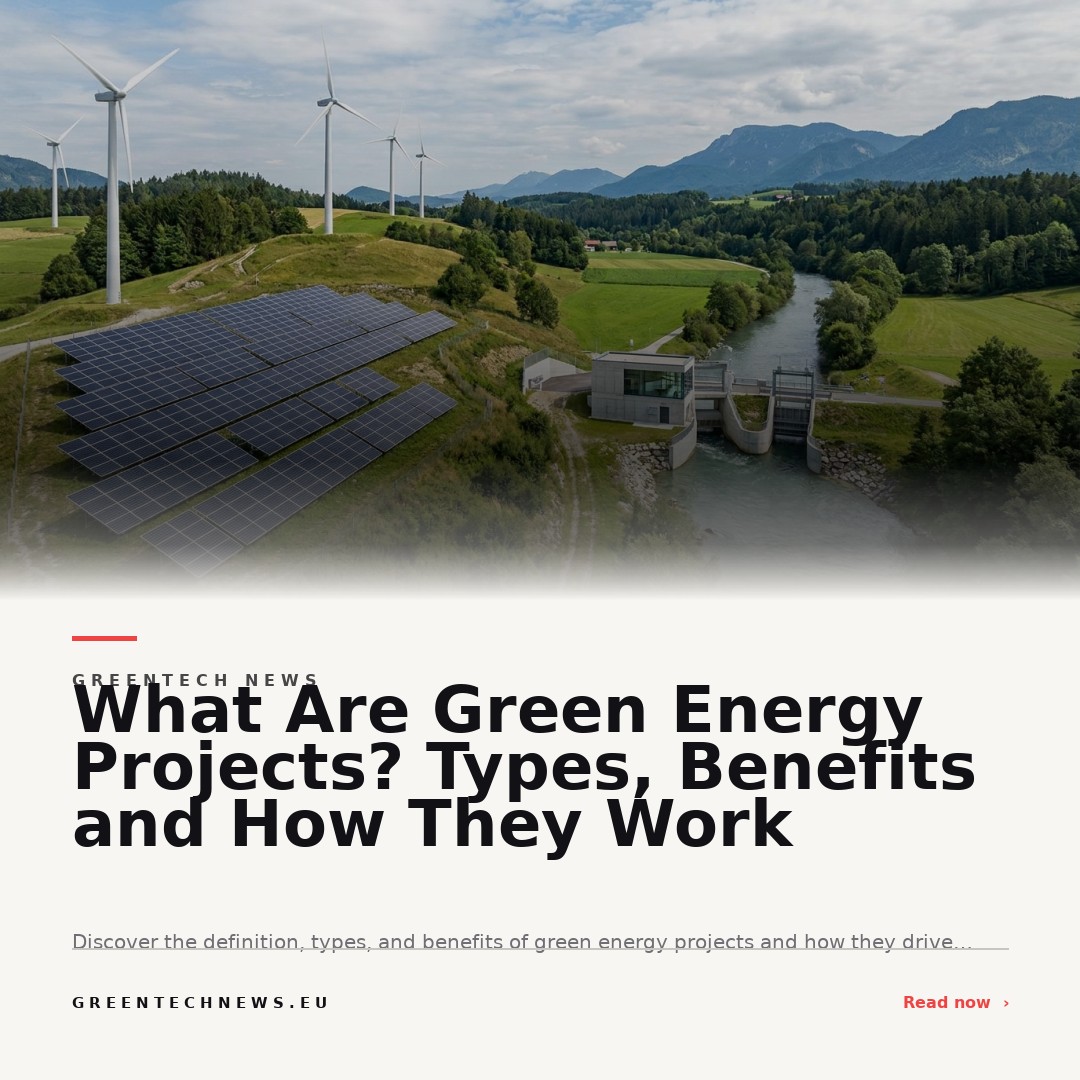
Green energy projects use naturally replenished resources like solar, wind, hydropower, and sustainable bioenergy to generate or deliver electricity and heat. They reduce greenhouse gas emissions, increase energy security, and are central to Europe’s clean energy transition, offering business and community benefits.
Green energy projects are initiatives that generate, store, or deliver energy using naturally replenished resources such as solar, wind, hydropower, geothermal, and sustainable bioenergy. These projects are at the heart of Europe’s clean energy transition, supporting climate targets, improving energy security, and providing economic opportunities for businesses and communities. This article explores what green energy projects are, how they work, their main types, the business case, and the challenges involved, with a focus on the European context.
- Green energy projects use renewable resources to produce electricity or heat.
- Types include solar farms, wind parks, hydropower, sustainable bioenergy, and geothermal plants.
- They support Europe’s climate goals, create jobs, and increase energy security.
What Are Green Energy Projects?
Green energy projects are defined as initiatives that develop, generate, store, or deliver energy using resources that are naturally replenished. Core examples include solar farms, wind parks (both onshore and offshore), hydropower stations, geothermal plants, and facilities for sustainable bioenergy, such as biogas and biomass power plants[2]. Their purpose is to provide energy solutions that do not rely on finite fossil fuels and have lower environmental footprints.
The term "green energy" is often used interchangeably with "renewable energy." However, green energy specifically refers to sources that are naturally sustainable and have minimal impacts across their lifecycle. These projects stand apart from conventional energy schemes, both in technology and in the way they are developed, financed, and integrated into the energy market[1].
How Do Green Energy Projects Work?
At the core, green energy projects transform natural energy flows into usable electricity or heat. The project's lifecycle begins with resource assessment—identifying sites with suitable solar, wind, water, geothermal, or biomass resources. Development follows, involving design, technology selection, permitting, and securing finance. Once operational, technologies such as photovoltaic panels, wind turbines, hydro turbines and bio-digesters convert the energy resource into electrical or thermal power[5].
Grid connection is crucial for project integration, and energy storage—commonly batteries or pumped hydropower—can help balance fluctuations from variable resources like solar or wind. Heat produced by some projects can serve local industry or district heating networks. Most green energy projects deliver their power via the electricity grid, often under power purchase agreements that secure revenue streams.
Main Types of Green Energy Projects
The principal types of green energy projects include:
Solar farms use photovoltaic panels or concentrated solar technology to harness sunlight; wind parks use turbines to capture kinetic wind energy, with large-scale deployment both onshore and offshore; hydropower stations generate electricity by channeling water flow through turbines; geothermal plants exploit heat beneath the Earth’s surface; and sustainable bioenergy projects convert organic matter into energy, often producing both biogas and renewable electricity[2]. Emerging technologies such as ocean energy, including tidal and wave power, are advancing in the European context, though at a smaller scale compared to solar and wind.
It’s important to distinguish between projects that generate renewable energy—like solar or wind farms—and enabling infrastructure such as battery storage and advanced grid solutions, which help integrate these resources into wider systems but do not themselves generate energy.
Benefits for Businesses and Communities
One of the chief benefits of green energy projects is the substantial reduction in greenhouse gas emissions compared to fossil fuel alternatives[1]. This supports international climate change mitigation efforts and contributes to improved air quality at the local level[4].
For businesses, green energy projects offer opportunities for lower long-term operating costs and access to more stable and predictable energy prices. As the EU expands its renewable capacity, reliance on imported fossil fuels decreases, strengthening energy security. Furthermore, these projects stimulate economic development by creating jobs across the supply chain—from R&D and manufacturing to installation, operations, and maintenance.
Investment in green energy technologies also accelerates innovation, supports new business models (such as corporate renewable PPAs), and opens revenue streams from electricity and certificates trading. Community-scale projects can enhance resilience, provide local benefits such as district heating or revenue sharing, and encourage greater social acceptance of the clean energy transition.
Challenges and Business Considerations
Despite their advantages, green energy projects face a range of technical, financial, and regulatory challenges. The variable nature of resources like solar and wind requires technology advances in storage, grid flexibility, and intelligent management to maintain reliable supply[5]. Upfront investment costs can be significant; securing project finance depends on robust business cases, proven technology, and, often, long-term contracts.
Permitting and grid connection processes may be complex and time-intensive, particularly in Europe where regulatory environments differ between countries. Projects must also consider land use, biodiversity, and possible impacts on local ecosystems—a careful planning and community engagement strategy is crucial[4].
From a business perspective, there are additional considerations: ensuring supply chain resiliency, understanding local incentives or funding schemes, managing operational risks, and navigating rapidly evolving energy markets. Revenue models vary from feed-in tariffs to corporate PPAs and open market participation—a topic explored further in our article How to Invest in Solar Energy Projects: Routes, Returns and Risks.
Green Energy Projects in Europe
Europe is a global leader in the roll-out of green energy projects, thanks largely to supportive policy frameworks like the EU Renewable Energy Directive, which sets binding targets for renewable energy shares in national mixes. The share of renewables in Europe’s electricity generation approached 40% in 2021—a result of sustained investment and innovation. EU-level goals aim for at least 42.5% renewables by 2030, incentivizing further deployment across all member states.
European businesses benefit through funding opportunities, innovation grants, and sector-wide demand for clean power. Ambitious national plans are underpinned by expanding green hydrogen, large-scale offshore wind clusters, and new grids able to integrate high shares of variable renewables. Companies exploring project development, partnerships, or investment can learn more about available mechanisms in our guide How to Finance Renewable Energy Projects in Europe: Strategies, Funding Sources and Best Practices.
Typical Problems
Integrating variable renewable sources like solar and wind into existing grids presents technical challenges. It requires reliable storage solutions and advanced grid management to smooth out supply fluctuations and maintain grid stability. Addressing these issues is essential for expanding renewable capacity without disrupting overall system reliability[5]. Additionally, careful consideration is needed regarding land use and ecological effects, such as impacts on wildlife or agricultural activity, which demand robust environmental assessments and mitigation plans[4].
Recent Developments
The European green energy sector continues to grow, as highlighted by the increasing share of renewables in the energy mix: reaching close to 40% of electricity generation by 2021. Ambitious targets, technological innovation, and increasing investor interest fuel ongoing expansion both in established technologies and emerging fields like offshore wind and green hydrogen. The focus also remains strong on modernizing grids and improving regional interconnections to maximize efficiency and enable cross-border energy trade.
How Businesses and Investors Can Get Involved
Companies and investors can participate in green energy projects through direct ownership, partnerships, financing models, or power purchase agreements. The development process requires attention to local resource quality, technology suitability, regulatory requirements, grid connection, economics, permits, and environmental and community impacts. For an in-depth look at project finance models and market access, refer to our dedicated article How to Finance Renewable Energy Projects in Europe: Strategies, Funding Sources and Best Practices.
Conclusion
Green energy projects are central pillars of the European clean energy transition, enabling emission reductions, technological progress, and business growth. While challenges exist in integration, funding, and environmental stewardship, the opportunities for businesses and communities are significant and expanding. As regulatory targets sharpen and new solutions emerge, green energy presents both immediate and long-term value for Europe’s sustainable future.
Quellen
[1] What is renewable energy? (United Nations)
[2] Renewable Energy – powering a safer future (International Energy Agency (IEA))
[4] What is green energy and why is it important? (National Grid, 2022-04-21)
[5] Renewable Energy Explained (U.S. Energy Information Administration (EIA))