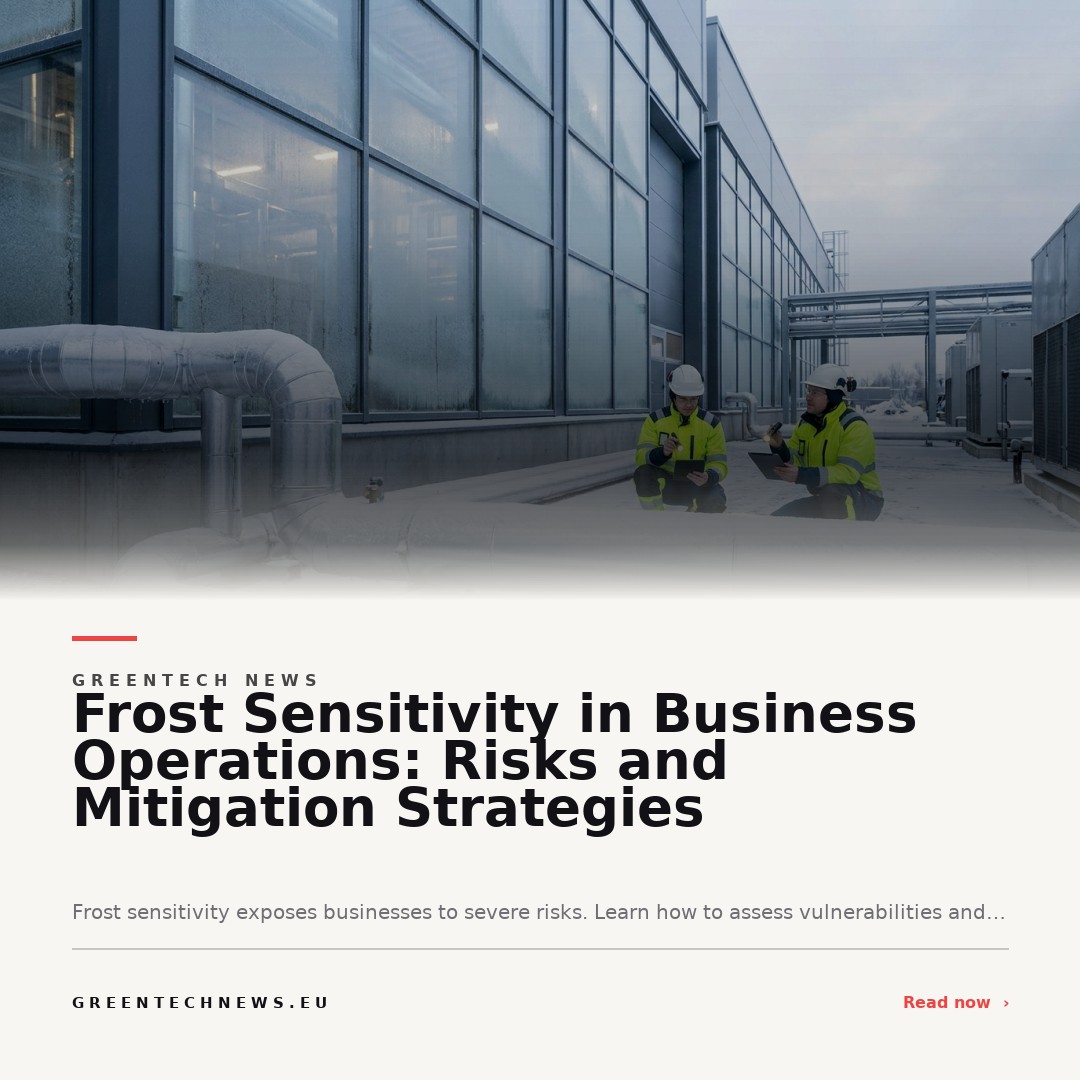
Frost sensitivity can disrupt business operations by causing delays, inventory spoilage, and infrastructure damage. Identifying vulnerable processes and adopting modern monitoring, robust contingency planning, and winterization measures are key to reducing these risks and maintaining business continuity.
Frost sensitivity is a critical but often underestimated factor in business operations, directly threatening supply chain stability, production continuity, and physical infrastructure across temperature-vulnerable industries. Businesses that systematically assess frost-related vulnerabilities and implement robust mitigation strategies are significantly better positioned to maintain operational resilience, minimize financial losses, and safeguard their reputation in an era of growing weather unpredictability.
- Frost sensitivity encompasses risks from freezing temperatures, impacting logistics, infrastructure, and product quality.
- Most at-risk sectors include agriculture, pharmaceuticals, logistics, and construction.
- Modern strategies and real-time monitoring are increasingly essential to prevent costly disruptions.
What is Frost Sensitivity in Business Operations?
Frost sensitivity refers to the vulnerability of business operations, particularly in logistics, supply chains, and infrastructure, to disruptions and damages caused by freezing temperatures and ice. Unlike routine weather issues, frost events pose acute challenges: temperature drops can halt transportation, damage machinery, spoil sensitive goods, and impair production timelines. Businesses must understand that frost is both a direct and systemic operational threat, requiring a multidimensional approach to risk management [2]. The definition not only covers direct physical impacts but also indirect aspects such as labor shortages and network failures that ripple across interconnected systems, making frost sensitivity a pivotal category within operational risk assessments.
Which Industries Are Most Vulnerable to Frost Events?
Industries where temperature control and continuity are essential, such as agriculture, food and pharmaceuticals, logistics, and construction, stand at the forefront of frost sensitivity. In agriculture, a sudden frost can destroy crops and disrupt planting schedules. For food and pharma sectors reliant on cold chains, freezing weather threatens product integrity and timely delivery. Logistics and transport companies experience delays and higher costs when routes freeze or assets become unusable. Construction faces halted projects or infrastructure damage when uninsulated systems fail [1]. The increasing frequency and severity of cold events across traditionally temperate regions further widen the sphere of impact, calling for an industry-specific analysis of frost adaptation needs.


How Does Frost Exposure Translate Into Business Risks?
Frost exposure creates a cascade of business risks, leading to direct operational losses and reputational damage. Frozen transport routes cause supply delays, empty shelves, and unfulfilled contracts. Product spoilage becomes a reality when temperature-sensitive goods exceed safe storage thresholds. Infrastructure, such as pipes, buildings, and production lines, is at risk of costly damage or shutdowns from freezing. The financial ramifications emerge not only from direct repairs or wastage but from the chain reactions: labor shortages due to impassable roads, outages in power supplies, and knock-on failures through interconnected nodes. An increase in costs, lost revenues, and the longer-term threat of diminished consumer trust all stem from unmitigated frost risk [3].
Why is Frost Sensitivity Gaining Significance in Business Strategy?
Frost events are becoming increasingly unpredictable and intense, partly due to ongoing climate change. This elevates the urgency for businesses in weather-sensitive sectors to move from reactive to proactive risk management. Traditionally, companies underestimated the indirect effects of frost—such as workforce inaccessibility or utility outages—which can amplify direct losses and compound their challenges [2]. Risk management providers are now responding to this shift by introducing bespoke advisory services and insurance solutions tailored to frost-sensitive operational models. The business case for investment in frost adaptation is therefore strengthening, blending short-term crisis response with long-term strategic planning.
How Can Businesses Assess Their Frost Sensitivity?
A comprehensive risk assessment is foundational for effective frost mitigation. Yet, many firms lack detailed, site-specific evaluations, instead relying on generic weather forecasts or historical precedent—a shortfall that leaves them exposed during sudden cold snaps [4]. Effective assessments should map all temperature-sensitive touchpoints: inbound raw material flows and outbound distribution, warehouse and facility infrastructure, and IT systems reliant on climate-sensitive hardware. It is crucial to identify dependencies between these nodes, as failures in one domain can rapidly compromise entire networks. Continuous assessment—updated as supply chains, sites, and climate conditions evolve—underpins agile and responsive risk management.
What Are the Key Strategies to Mitigate Frost Risks?
Proactive mitigation requires both technological and procedural shifts. Investment in insulating and winterizing physical assets remains a primary defense; unprotected pipes, valves, and storage facilities can be equipped with heat tracing and thermal barriers to withstand sudden freezes. Simultaneously, contingency planning is vital: flexible sourcing agreements, diversified supplier bases, and cold routing alternatives reduce overreliance on a single vulnerable node. Remote monitoring technologies have recently matured, offering real-time tracking for temperature-sensitive shipments and key infrastructure, so emerging risks are spotted instantly and addressed before damage occurs [1]. Tailored staff training and cross-departmental drills build readiness for abrupt weather shifts, ensuring rapid, coordinated responses.
What Role Do Supply Chains Play in Overall Frost Risk?
Modern businesses are intricately networked, with supply chains acting as both a critical strength and vulnerability. Frost sensitivity does not solely affect production or end delivery; it also places at risk the inbound flow of essential materials. Contingency plans should therefore extend across the entire chain, ensuring that alternatives exist for both sourcing inputs and fulfilling customer orders when regular links are disrupted. Flexible contracts and established lines of communication with transport partners facilitate quick rerouting. Integration with digital platforms that aggregate real-time risk data offers a substantial edge in coordinating these responses [3].
Typical Problems in Frost Readiness
Even in high-risk industries, firms often underinvest in frost preparation. Common shortcomings include the absence of detailed site-specific risk maps and an overreliance on ad hoc measures when frost warnings occur. Inadequate insulation and failure to maintain or upgrade old infrastructure repeatedly lead to avoidable shutdowns, leaks, and breakdowns during freezes [4]. Weak communication channels and poorly trained staff can also slow organizational response, making sporadic preparedness a recurring liability.
Recent Developments in Mitigating Frost Risks
The business landscape has seen notable advancements in proactive frost risk management. Remote monitoring solutions have matured, allowing companies to observe the environmental conditions of shipments, warehouses, and facilities in real time. These tools serve as early warning systems, enabling swift intervention before frost can inflict damage or disruption [1]. Meanwhile, risk management providers are customizing their services for frost-sensitive clients, offering specialized insurance and advisory programs that reflect the increasing need for bespoke adaptation in weather-impacted sectors [2]. The convergence of technology and tailored financial tools is reshaping how companies respond to meteorological hazards.
Conclusion: Towards Resilience in an Uncertain Climate
Frost sensitivity will remain a defining challenge for businesses operating in vulnerable sectors as climate volatility persists. The integration of thorough risk assessments, robust winterization, advanced monitoring, and flexible supply chain management is rapidly becoming best practice. Operational resilience, therefore, depends on a calibrated, anticipatory approach to frost risk—moving beyond one-off fixes towards layered, responsive frameworks that adapt as exposures evolve. Looking ahead, businesses that proactively invest in these strategies will be best equipped to weather both the expected and the unexpected cold spells of the future.
Quellen
[1] Cold Chain Logistics: How to Prepare for Severe Weather (ShipperHQ, 2023-02-09)
[2] Risk Management for Weather-Sensitive Industries (Zurich North America, 2022-02-10)
[3] How Winter Weather Impacts Supply Chains (Supply Chain Dive, 2023-01-27)
[4] How Businesses Can Prepare for Freeze-Induced Disruptions (FM Global, 2022-12-01)