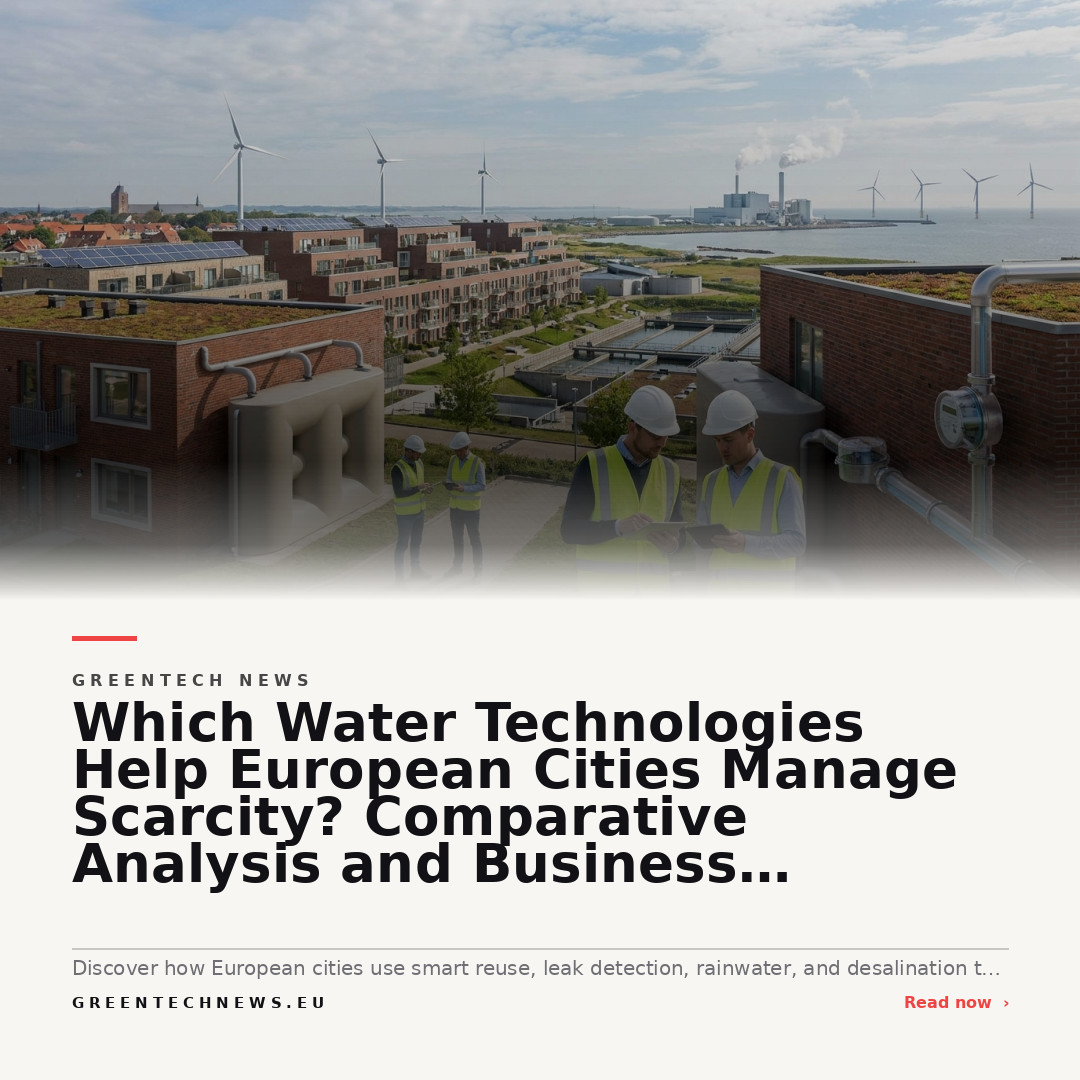
European cities address water scarcity by integrating smart metering, leak detection, water reuse, rainwater harvesting, nature-based storage, and desalination. The optimal mix depends on local water stress, infrastructure, and economic factors, aiming to maximize efficiency and minimize environmental impact.
To tackle urban water scarcity, European cities are turning to a combination of advanced technologies and nature-based solutions. Effective management now relies on a portfolio approach: first addressing demand reduction and water loss, then integrating reuse, rainfall capture, and if necessary, new supply options such as desalination. Smart metering, leak detection, wastewater and greywater reuse, rainwater harvesting, nature-based storage, and desalination each play distinct roles. For city leaders and businesses, understanding the comparative benefits and trade-offs of these options is crucial for sustainable water management in a changing climate.
- Smart metering and leak detection cut distribution losses by up to 30% and are fast to deploy.
- Wastewater and greywater reuse provide steady local supply but need advanced treatment and public buy-in.
- Rainwater harvesting and nature-based storage protect cities against drought and flooding, but yields vary.
- Desalination adds capacity where needed but has high energy and environmental costs.
Why European Cities Need a Portfolio Approach to Water Scarcity
No single technology offers a universal fix for water scarcity in European urban environments. Instead, cities are advised to blend solutions taylored to their specific water conditions, infrastructure readiness, and intended water uses. This aligns with European Union policy, which emphasizes the "water efficiency first" principle, encouraging cities to prioritize demand reduction, network efficiency, and reuse before resorting to energy-intensive new supply solutions. Such a strategy is particularly important given the variable climate and infrastructure diversity found across European regions.
Wastewater and Greywater Reuse: Recovering Water Close to Demand
Water reuse technologies treat municipal or industrial wastewater so it can be returned to agriculture, industry, or selected urban applications. Advanced treatment transforms wastewater into high-quality water for irrigation, cooling, or even municipal landscaping. Greywater recycling diverts lightly-used water from sinks and showers for non-potable reuse within buildings or districts. These approaches are already common in cities like Barcelona and Nicosia, where water scarcity is acute and infrastructure allows for safe distribution. However, the cost of advanced treatment and challenges in public perception—especially where regulation and communication are lacking—can slow adoption. European standards for water reuse are evolving, with the 2023 Water Reuse Regulation setting minimum requirements for agriculture and aiming to bolster safe practices across the EU.

Typical Problems
Water reuse often faces hurdles related to regulatory fragmentation and community concern about the health risks of treated wastewater. Harmonized EU standards and more effective risk communication are seen as key to scaling up deployment.
Smart Metering and Leak Detection: Reducing Demand and Distribution Losses
Losses in aging water distribution systems are a major source of wasted water. Smart meters and leak detection technologies are increasingly used to identify issues in real time, helping utilities fix leaks quickly and prevent non-revenue water losses. Implementation of these technologies has shown water loss reductions of 15-30% in drought-prone cities, making them a high-priority, cost-effective first step before investing in new supply sources. However, the rollout can be challenging in historic city centers or where digital infrastructure and investment capacities are limited, requiring skilled staff and long-term technical planning.
Typical Problems
Initial investments, integration into existing infrastructure, and developing relevant skills can be barriers—especially in older towns or those with constrained budgets. These factors can slow digital innovation uptake and limit the overall impact.
Rainwater Harvesting and Nature-Based Storage: Capturing Rainfall and Easing Runoff
Rainwater harvesting systems collect and store precipitation from roofs or other impermeable surfaces for non-potable uses, such as irrigation, street cleaning, or toilet flushing. Nature-based solutions—such as restoring wetlands, green roofs, or urban parks—enhance storage, improve water quality, and provide resilience to both drought and flooding. Cities like Berlin and Barcelona are integrating these solutions into new developments, supporting both water security and broader climate adaptation goals [1],. However, technical and climate limitations—such as roof area and local rainfall patterns—mean these solutions are usually supplements rather than replacements for central water supplies.
Typical Problems
The effectiveness of rainwater harvesting depends on available collection surfaces and rainfall frequency, which can limit yields. For nature-based solutions, maintenance and monitoring are essential to ensure lasting benefits.
Desalination: Adding a Dependable but Energy-Intensive Supply
Desalination plants convert seawater into freshwater, providing a reliable, drought-proof supply for coastal and semi-arid regions, particularly in southern Europe (e.g., Malta, Cyprus, Spain). This method can stabilize water availability, especially for cities with limited alternative sources. However, desalination has high energy requirements and environmental impacts, notably from brine discharge and greenhouse gas emissions. Recent efforts to power desalination using renewables and tougher emissions and discharge regulations are aiming to reduce these impacts. Desalination is typically considered only when other, less energy-intensive options are insufficient.
Typical Problems
Desalination’s relatively large carbon footprint and pollution risks have prompted calls for stricter regulation and greater reliance on renewable energy to ensure the process is sustainable.
How to Compare Technologies by Cost, Energy, Scale, and Environmental Impact
The suitability and timing of different water technologies depend on several factors: up-front and operating costs, energy demands, water yields, and potential environmental effects. Smart meters and leak detection are generally cost-effective low-hanging fruit—offering rapid return on investment by reducing existing losses. Wastewater and greywater reuse require significant treatment and monitoring investments, but yield a highly predictable local resource, especially for non-potable applications. Rainwater harvesting and urban blue-green infrastructure provide co-benefits for climate adaptation and biodiversity, but their reliability hinges on local precipitation patterns. Desalination guarantees supply but brings the highest energy and emissions costs, making its adoption highly context-dependent and best paired with renewables where possible.
Current Developments
The EU's introduction of minimum water reuse requirements under the Water Reuse Regulation is accelerating adoption of reclaimed water, particularly for agricultural irrigation. More cities are also blending nature-based solutions with engineered infrastructure to enhance water resilience, biodiversity, and ecosystem services as part of integrated climate adaptation planning [1],. Yet, overall uptake remains uneven: the European Commission reports that just 2.4% of EU wastewater is reused, highlighting substantial room for increased deployment of these solutions.
Choosing the Right Mix for Different European City Conditions
City-specific conditions—such as geography, population density, water demand volumes, and existing infrastructure—shape which combination of technologies will yield the best results. For instance, coastal cities with limited groundwater can consider desalination as a last resort, whereas urban areas with sufficient wastewater collection should prioritize reuse. Distribution efficiency improvements are beneficial everywhere but may face practical constraints in dense historic areas. Meanwhile, cities with ambitious climate targets can leverage nature-based solutions for multiple co-benefits, beyond just water supply. Decision-makers are increasingly expected to blend financial, environmental, and social factors when choosing which technology portfolio to deploy.
Business Implications: Procurement, Financing, and Project Delivery
For municipal utilities, investors, and technology suppliers, the business case for each technology depends on lifecycle costs, funding access, and policy context. The EU and many Member States now offer targeted grants and financing for water efficiency, network upgrades, and nature-based approaches. Procurement is shifting toward integrated, outcome-focused contracts—often requiring collaboration between public authorities, private partners, and civil society. Technical skills, long-term maintenance planning, and robust monitoring systems are critical to maximize impact and prove value, especially as scrutiny grows over climate performance and environmental risk.
Conclusion: A Tailored, Layered Future for Urban Water Security
To sustainably manage water scarcity, European cities must move beyond one-size-fits-all approaches and craft local portfolios that address their unique challenges while maximizing water efficiency and environmental benefits. Smart meters, leakage detection, resource reuse, and nature-based strategies are rapidly becoming standard, with desalination reserved for the most water-stressed geographies. Business and policy leadership focused on integrated planning, adaptable financing, and public engagement will be key to unlocking the full potential of these solutions for European water resilience.
Quellen
[1] Technologies and nature-based solutions for urban water security in Europe (European Commission - Joint Research Centre, 2020-10-14)