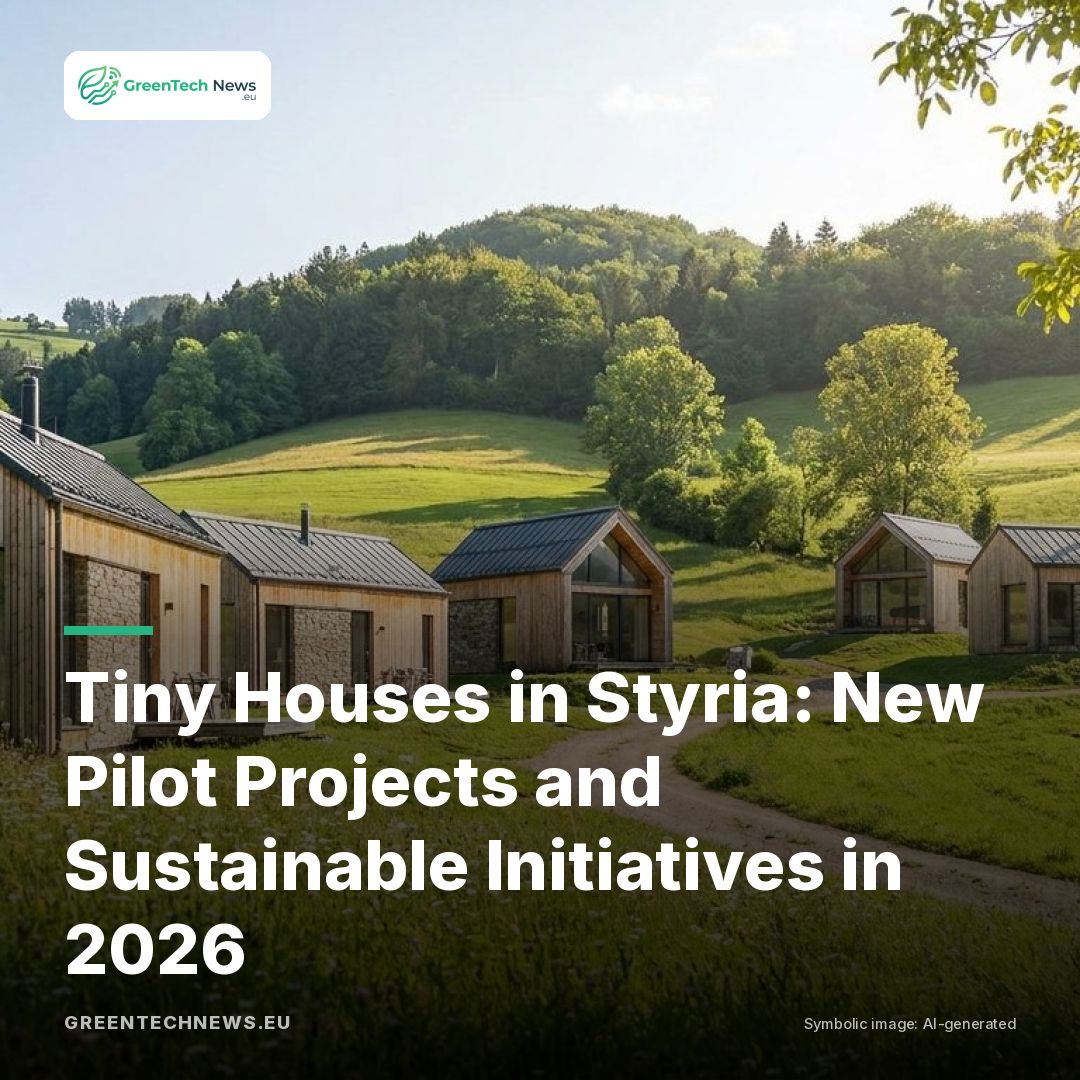
Tiny Houses are becoming increasingly significant in Styria in 2026 as innovative and sustainable housing solutions. New pilot projects and regional cooperation are paving the way for affordable, eco-friendly living and addressing housing challenges in the region.
Tiny Houses are emerging in 2026 as a response to numerous housing and environmental challenges in Styria: new pilot projects are focusing on sustainable construction methods, flexible use of space, and innovative approval models. Through locally rooted initiatives and a range of collaborations, Tiny Houses are being established as part of a future-oriented housing culture, offering important regional and broader impulses.
- Tiny Houses are a growing trend in sustainable housing construction in Styria in 2026.
- Pilot projects are demonstrating new approaches to affordable and resource-efficient building.
- Initiatives are promoting regional cooperation and sustainable housing concepts.
Tiny Houses as an Answer to New Housing and Environmental Issues
More and more people in Styria are interested in alternative forms of housing that are ecological, affordable, and flexible. Tiny Houses fit perfectly into this trend: they require little space, are resource-efficient, and can often be realised faster than conventional new-build projects. These features make them especially attractive given rising land prices and increasing environmental awareness. The compact construction significantly reduces energy needs and material consumption. This creates sustainable solutions for various groups – from singles to small families.
Pilot Projects: Practical Implementation and Local Characteristics
In recent years, numerous pilot projects have been launched in Styria to test and further develop Tiny Houses in practice. Project operators are often consortia of municipalities, private developers, and local craftspeople. Different approaches are evident: while some initiatives focus on completely self-sufficient energy concepts, others integrate Tiny Houses into existing neighbourhoods or cooperate with local social organisations to create new housing models. Cities such as Graz and Leoben have already supported the first settlements, deliberately acting as model sites for climate-friendly construction and communal living. Many projects are part of regional competitions or are supported through funding programmes by the state of Styria. A key goal is to establish Tiny Houses as a fully-fledged part of a sustainable building culture.

Approval, Planning and Technological Innovations in 2026
Despite many improvements, the approval procedure for Tiny Houses in 2026 is not uniformly regulated everywhere. While some municipalities specifically designate areas and simplify conditions, hurdles remain elsewhere. Here, initiatives such as regional advisory services and information events help: they support builders with planning and explain technical requirements, such as energy autonomy, choice of insulation, or rainwater use. The integration of modern technologies – from smart building controls to solar energy – ensures Tiny Houses are also exemplary in terms of energy efficiency. Mobile or modular designs further increase usage flexibility and create experimental space, for example for temporary living or tourism-focused pilot projects.
Societal Change and New Housing Perspectives
Tiny Houses are more than just a fashion trend: they reflect many people’s desire for a simpler and more conscious lifestyle. Styria demonstrates this well: with shared spaces, urban gardens, and communal infrastructure, new models of living together are emerging, preventing social isolation and promoting neighbourly exchange. Young people, couples, and older singles in particular are embracing these concepts for themselves – as an affordable alternative to traditional rental flats or home ownership. The combination of privacy in a mini house and community in shared areas is one of the secrets to the success of Styrian Tiny House projects.
Typical Problems
The most common obstacles include bureaucratic uncertainty regarding permits and lack of legal clarity about mobility, parking, and permissible duration of use. Some municipalities find it difficult to adapt existing building regulations to the Tiny House concept. There are also issues with creating sustainable connections for water, electricity, and wastewater.
Current Developments
Around 2026, the topic of Tiny Houses in Styria is gaining further momentum: new pilot areas are being developed, cooperative projects with social institutions provide space for innovative housing and working models. Public awareness and political support are growing, and more advisory services and information sessions are emerging at municipal level. Research projects are evaluating the effects of Tiny House settlements on urban and rural development to identify optimisation potential at an early stage.
Regional Initiatives and Cooperation Connect Stakeholders
A key to the success of the Tiny House movement in Styria is the close cooperation between citizen initiatives, municipalities, architects, and craftspeople. Regional networking events, pilot projects, and trade fairs bring together interested parties and create synergies. The main aim is to pool knowledge and share experiences openly to overcome existing obstacles together. Most initiatives place strong emphasis on regional value creation – for example, using local timber or craftsmen.
Outlook: Tiny Houses as a Component of Building Culture
The growing acceptance and variety of projects show that Tiny Houses in Styria are more than just a short-lived trend. With innovative approaches, regional integration, and sustainable concepts, they can contribute to solving acute housing problems and provide a stimulus for climate-friendly construction in the long term. Those who try Tiny Houses become part of a movement that is opening up new ways of living in the region. Which future model will prevail and how the landscape of cities and villages will change remains to be seen – but Styria’s Tiny House scene will remain dynamic in 2026 and beyond.