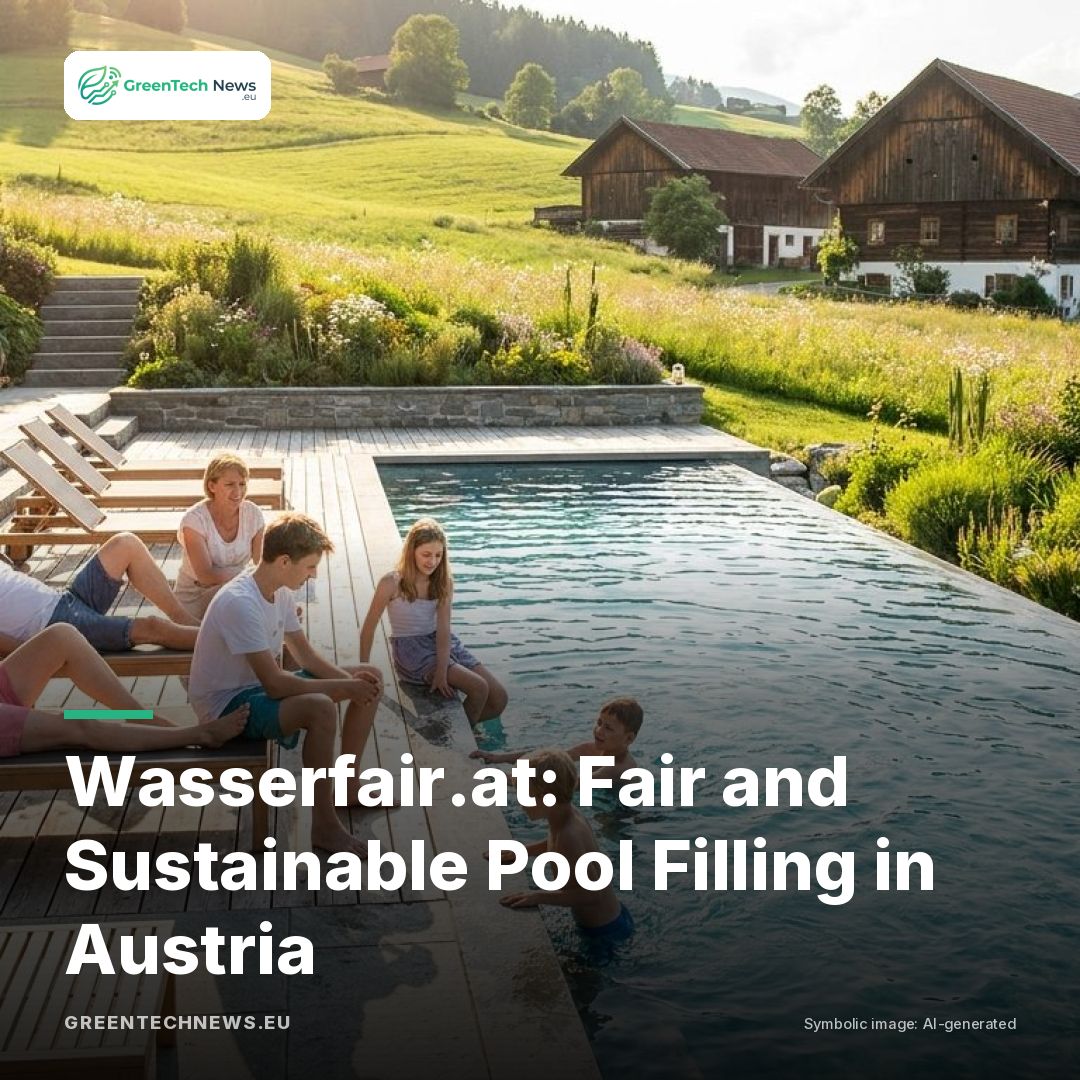
Wasserfair.at focuses on fair and sustainable pool filling in Austria, balancing individual and collective responsibility. New EU rules from 2026 on PFAS monitoring will make responsible water use for pools even more crucial.
As a platform dedicated to socially fair and sustainable use of water for pool filling, Wasserfair.at provides answers to the growing challenges in water management, nature conservation, and fairness in handling one of Austria’s most vital resources. The platform addresses the key issue of how pool owners can use water responsibly and, through practical solutions, strengthens societal fairness in private water usage.
- Wasserfair.at focuses on balanced water usage and fairness in pool filling across Austria.
- Sustainable water supply, resource protection, and social justice are the heart of the concept.
- EU regulations—such as PFAS monitoring—will directly affect pools and drinking water from 2026 onward.
Why Fair Water Use for Pools Matters
Questions of water ownership and its socially acceptable usage occupy an increasing part of the population, especially with rising temperatures, longer dry spells, and growing leisure needs. While pool owners appreciate their comfort, others view large-scale private pool filling as a luxury that is rightly questioned given limited resources. In Austria—a country actually rich in water reserves—these debates are intensifying due to climate change and regional shortages. Wasserfair.at provides transparency between individual desires and the collective interest in balanced resource sharing.
Pools as a Symbol of Sustainable Responsibility
The private swimming pool is increasingly central to debates on sustainability. While it once symbolised summer fun and affluence, the question of societal responsibility borne by pool owners is becoming more prominent. The use of drinking water to fill private pools is often criticised—especially in regions where water is scarce or municipalities are densely populated. Wasserfair.at therefore advocates a fair approach and responsible water use—considering ecological, social, and legal factors.


The Role of Sustainable Water Use in Pool Filling
Wasserfair.at aims to strike a balance between individual recreation and protecting water as a shared resource. Rational pool filling means using as little drinking water as possible, utilising rainwater and sustainable alternatives, and deploying smart irrigation systems to optimise usage. The platform shares information on technical solutions and organisational models—from shared usage and digital monitoring to support for water-saving pool technologies.
Regulatory Requirements and EU Standards: Importance of PFAS Monitoring
New legislation is a key driver for sustainable pool filling. From 2026, the European Union will tighten monitoring of pollutants such as PFAS in drinking water. These guidelines directly affect private pool filling, as water suppliers will be required to meet stricter quality standards. Pool owners should inform themselves in good time about how the new EU rules could practically impact local infrastructure and water costs. In-depth information can be found in articles such as 'EU Steps Up PFAS Monitoring: New Drinking Water Rules from 2026' and 'Drinking Water in Europe: What Mandatory PFAS Monitoring from 2026 Means.'
Social and Regional Dimensions: Who Can Use How Much?
The fairness issue concerns not just availability, but distribution: Where the water supply network is stretched or groundwater is already under pressure, large private pools cause discontent—especially among those unable to afford a pool. Wasserfair.at promotes dialogue, transparency, and regulated procedures to prevent envy, resentment, and misunderstandings. The platform supports a model that considers local resources, regional characteristics, and social factors. In municipalities where all users openly disclose their consumption, distribution is particularly fair.
Technical Innovations for Sustainable Pool Use
Modern water management is about more than isolated measures—it requires a societal shift in how we handle water. Sensors, digital consumption tracking, rainwater harvesting, and efficient pumps or covers are building blocks for this transformation. Wasserfair.at showcases innovations that help reuse pool water and significantly reduce overall consumption. Through partnerships with regional water suppliers and collaboration with technology providers, new approaches are tested and evaluated for their effectiveness—always considering fairness and resource preservation.
Public Perception and Societal Debate
In recent years, the social acceptance of pool filling has become a topic of discussion in the media, neighbourhoods, and local politics. While some complain about restrictions, others see the preservation of water quality and supplies as a key issue for the future. Wasserfair.at positions itself as a mediator and information hub, pooling expertise, sharing experiences, and promoting constructive solutions. The platform works closely with environmental organisations, municipalities, and scientific institutions to support informed public and scientific debate.
Recommendations for Pool Owners
Those who use a pool privately or in a community should stay informed on water availability, sensible filling periods, and ways to save water—and actively use these options. Water-saving pools can be designed to use rainwater as the main source, rely on reliable filtration, and refill only when truly necessary with smart control. Wasserfair.at provides up-to-date information, practical tips, and networking opportunities for everyone wishing to manage their water use responsibly and in the interest of the wider community.
Conclusion and Outlook: Towards a Fairer Water Future
Sustainable and fair pool filling is a central issue for Austria’s water management, set to become even more important in the future. Wasserfair.at highlights paths to combine social responsibility with individual comfort. The ongoing development of new technologies, regulatory frameworks, and regional cooperation will be crucial to ensuring water remains fairly accessible to all. The coming years promise exciting innovations—and call for us all to actively shape a fair future for water.